
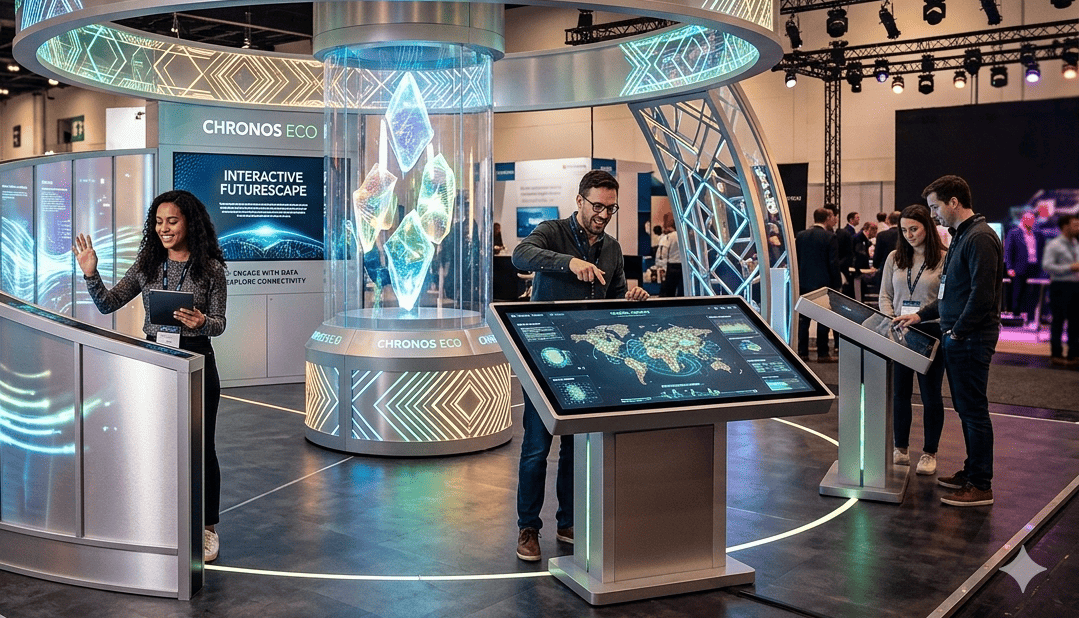
Feeling your trade show booth isn't grabbing enough attention? Visitors often rush past, missing your message entirely. Let's make your exhibit a magnetic experience that truly engages.
To make your trade show booth interactive, focus on engaging visitors through technology, hands-on experiences, and personalized content. Effective interaction should align with your brand message and encourage meaningful conversations, moving beyond simple observation to active participation and memory creation.
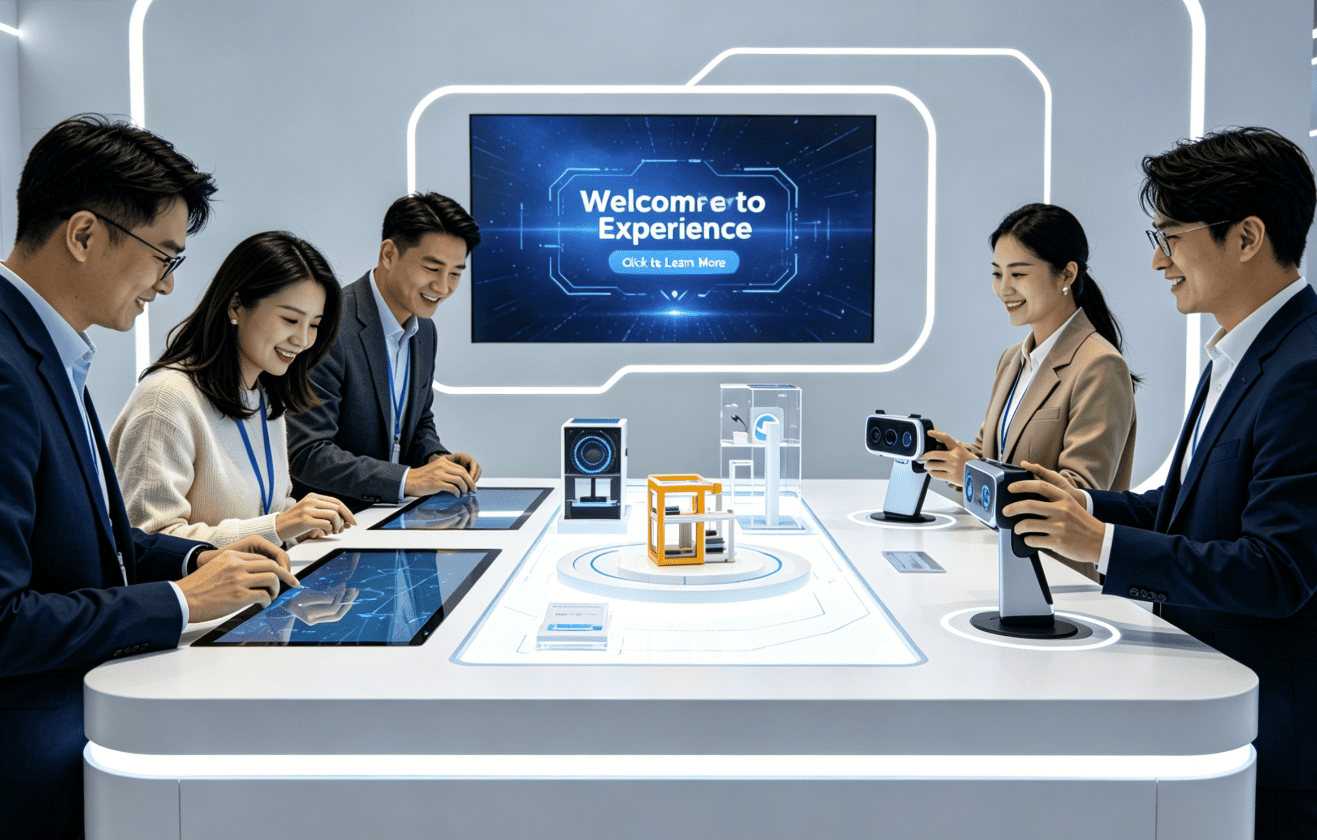
Many international exhibitors I work with wonder how to stand out in crowded US trade shows. The secret often lies in transforming a static display into a dynamic, engaging environment. Let's explore how thoughtful interactive elements can create memorable experiences for your visitors and drive your show goals.
Why Should My Booth Be Interactive?
Are you struggling to connect with visitors effectively at trade shows? A static display might be the problem. Interaction is key to cutting through the noise and making a lasting impression.
An interactive trade show booth captures attention, increases dwell time, and improves lead quality1 by turning passive observers into active participants. It helps communicate complex messages simply2 and creates memorable experiences that reinforce your brand's value proposition long after the event3.
Beyond Just Attracting Eyeballs
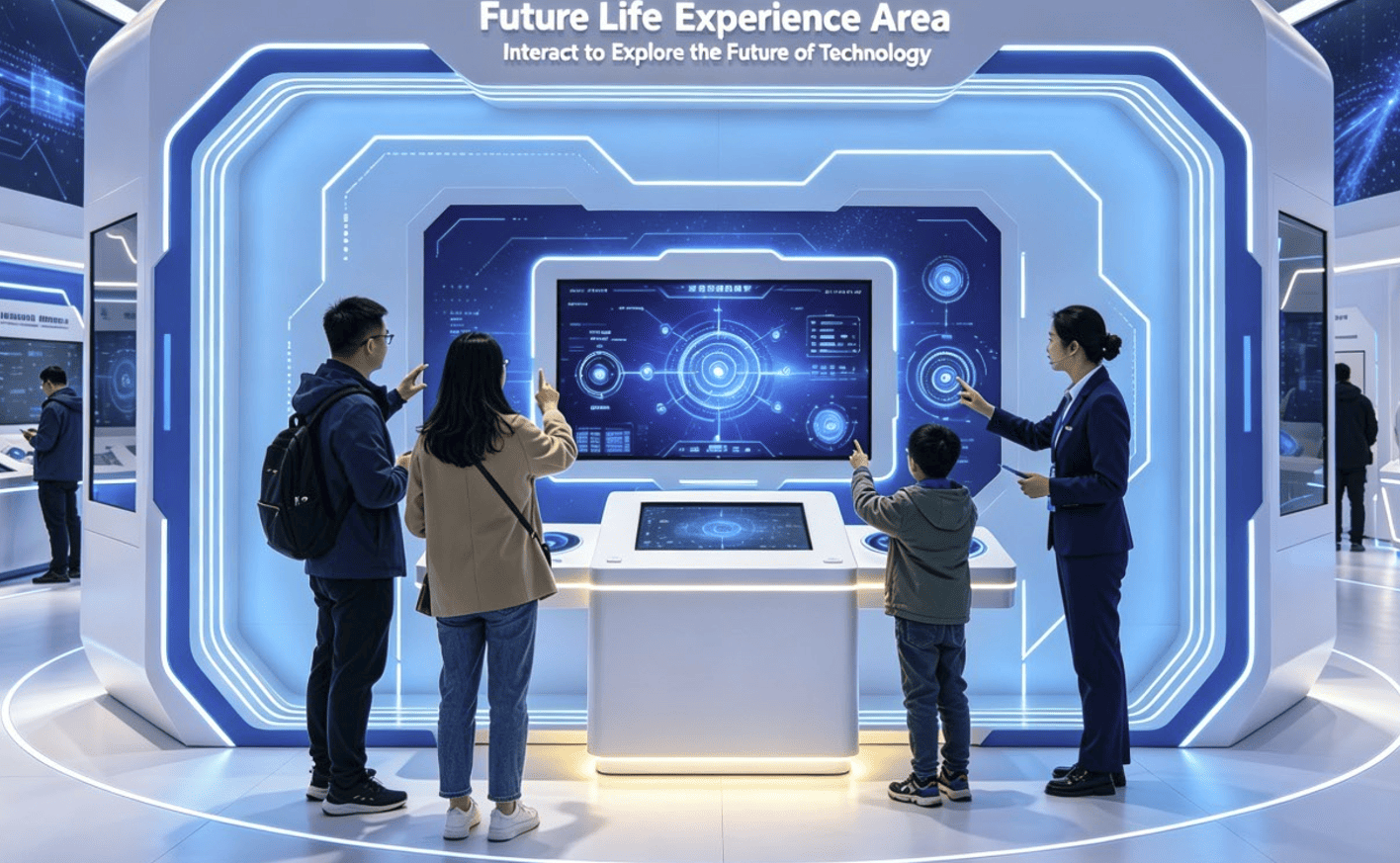
When I work with international clients, a common misconception I encounter is that "interactive" simply means adding a big screen or a flashy gadget. However, the true value of an interactive element lies in its purpose. It's not just about attracting eyeballs for a fleeting moment. It's about drawing visitors in, getting them to engage with your brand, and ultimately converting that engagement into a meaningful business opportunity. My aim is always to help clients see beyond the 'wow' factor and focus on the strategic impact.
Aligning Interaction with Objectives
The effectiveness of any interactive booth element directly relates to how well it aligns with your specific exhibit goals4. Are you looking to generate leads, launch a new product, educate visitors, or strengthen brand awareness? Each goal requires a different interactive approach. For instance, if your primary goal is lead generation, a gamified quiz or a product configurator that requires data input might be more effective than a passive video wall5. If it's product demonstration, a virtual reality experience might shine.
My Experience
I once worked with a European manufacturing client who initially wanted a massive video wall to show their product in action. After discussions, we shifted their budget and focus. We instead implemented several interactive product configurators on tablets stationed around the booth. This allowed engineers and purchasing managers to custom-build their ideal machine on the spot, tailoring features and specifications. This not only captured specific needs but also immediately gathered their contact information. This tailored, goal-oriented approach led to a 30% increase in qualified leads compared to their previous static displays. The client learned that clarity of purpose drives successful interaction, not just visual appeal.
Here's a simple breakdown of how goals can guide your interactive choices:
| Exhibit Goal | Recommended Interactive Solution | Expected Outcome |
|---|---|---|
| Lead Generation | Digital games, quizzes, product configurators | Capture contact info, qualify interest, gather data |
| Product Demo | VR/AR experiences, touchscreens, live demos | Deeper product understanding, hands-on experience |
| Brand Awareness | Photo booths, social media walls, immersive visuals | Increased social sharing, memorable brand recall |
| Education | Interactive presentations, knowledge hubs | Informative engagement, thought leadership |
What Kinds of Interactive Elements Can I Use Effectively?
Feeling overwhelmed by all the tech options for your booth? Choosing the right interactive tools can be confusing. Let's simplify and explore what truly engages visitors.
Effective interactive elements include touchscreens for product exploration, augmented or virtual reality for immersive demonstrations, gamified experiences for engagement, and live product demos allowing hands-on interaction. The best choice depends on your product, audience, and the specific message you want to convey.
Digital vs. Physical Interaction
When I advise international clients, I stress that "interactive" doesn't always mean cutting-edge tech. Sometimes, a well-designed physical product demo where visitors can touch and feel your product is more engaging than a complex VR experience6. The key is to match the interaction type to your product and your audience. A high-tech medical device might benefit greatly from AR overlays showing internal mechanisms, allowing users to "see inside" without physical disassembly7. In contrast, a machinery company might gain more from a miniature working model or a digital simulator where users can control processes. Both are interactive, but one is digital and the other is physical.
Considering Visitor Flow and Dwell Time
It is crucial to think about visitor flow and how much time people are likely to spend at your booth. An immersive VR experience, while powerful, can create bottlenecks if it takes several minutes per user.8 For a bustling trade show like CES, where people are trying to see many booths9, a series of shorter, standing touch-screen interactions might be more effective. You can then reserve a single, dedicated VR station for deeper dives with truly interested prospects. This balances quick engagement with opportunities for more involved interactions, maintaining a smooth visitor flow.
A Common Mistake
I remember a Japanese client for CES who, at first, wanted a fully immersive VR experience that required visitors to wear headsets for several minutes. While innovative, we realized this approach would likely create significant bottlenecks and deter quick passers-by who just wanted to learn something fast. We modified their plan to incorporate shorter, standing touch-screen experiences for general product overview, reserving just one dedicated VR station for deep dives with genuinely interested prospects. This adjustment balanced quick engagement with longer, more involved interactions, maintaining visitor flow effectively. It's crucial to consider the average time visitors spend at your booth and design interactions that fit. Not everyone wants a 5-minute deep dive; sometimes, a 30-second engaging quiz is perfect.
Here are some common interactive elements and their best uses:
| Interactive Element | Best Use Case | Key Consideration |
|---|---|---|
| Touchscreens | Product catalogs, quizzes, interactive maps | Intuitive UI, clear calls to action |
| VR/AR | Complex product demos, immersive experiences | Space requirements, attendant support, dwell time |
| Gamification | Lead capture, brand engagement | Clear rules, quick play, appealing rewards |
| Live Demos | Physical product showcase, expert interaction | Staffing, safety, clear presentation |
| Social Walls | User-generated content, community building | Moderation, clear hashtags, real-time updates |
How Can I Ensure My Interactive Booth Truly Resonates with Visitors?
Worried your interactive booth might fall flat or be misunderstood? It's a common concern among international exhibitors. Let's make sure your efforts truly connect.
To ensure your interactive booth resonates, design experiences that are intuitive, clearly communicate your brand message, and offer clear value to the visitor. Account for cultural nuances in design and language, and provide clear calls to action that guide participants toward the next step in their engagement journey.
Simplicity Over Complexity
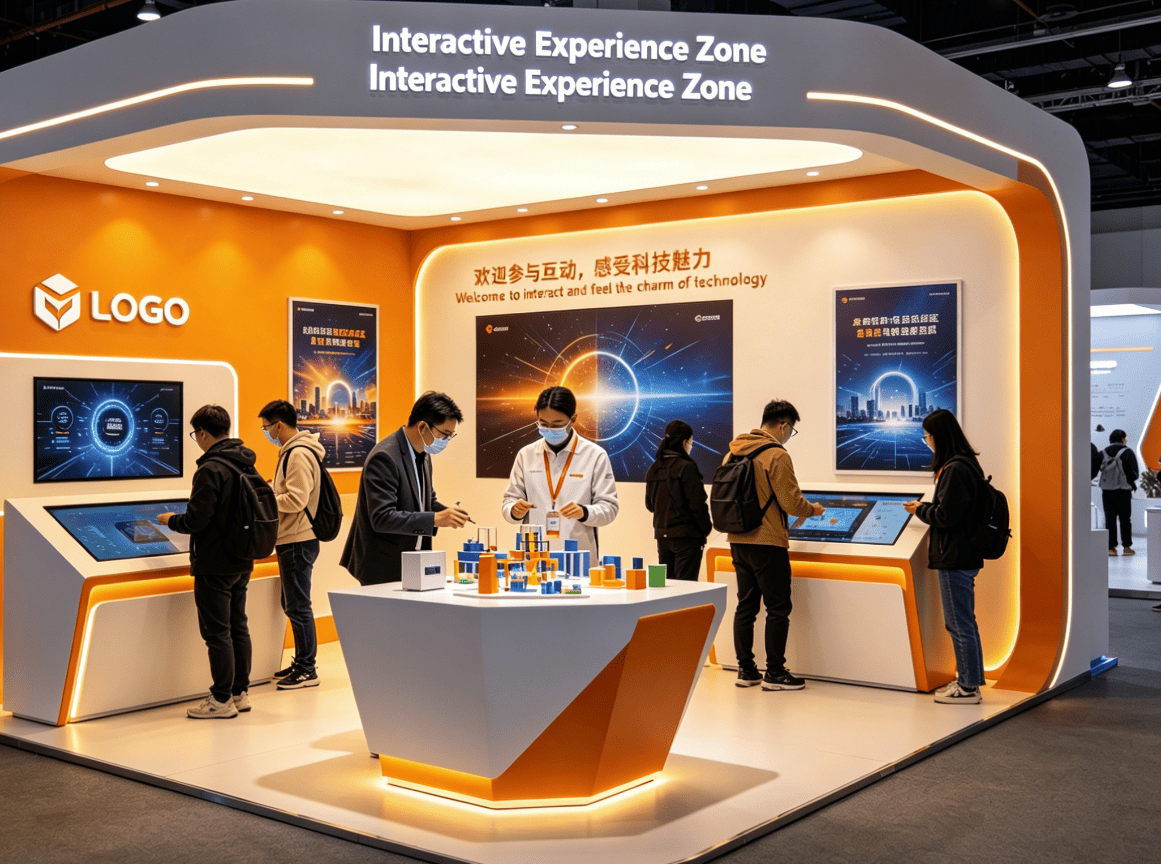
A big misconception I've observed with international clients is thinking that the more complex or technologically advanced an interaction, the better it will be. This is not always true. Often, a simple, well-designed touch screen with clear navigation and a straightforward goal performs far better than an overly complicated VR game that confuses users or requires a steep learning curve. Usability is paramount. If visitors struggle to understand how to use your interactive element, they will quickly disengage and move on.10 The goal is to lower the barrier to engagement, not raise it. Simplicity often translates to higher participation and better data capture.
Cultural Sensitivity in Design
Another critical aspect is cultural sensitivity. Never assume universal appeal when designing interactive elements. What works well and is understood in one culture might not land as intended in another. Gestures, color meanings, humor, and even question phrasing can differ significantly.11 When working with international exhibitors, I always emphasize the need to review interactive content through a cultural lens. This might mean adjusting graphics, wording, or even the type of interaction to ensure it resonates with the diverse audience typically found at major US trade shows.
The Language Barrier
I advised a client from the Middle East for a US show. Their initial interactive concept involved a lot of indirect questioning and subtle humor, which, while effective in their home market, might not be immediately understood by a diverse American audience looking for direct information. We adapted it to be more straightforward, visually driven, and focused on clear benefits and explicit calls to action. We also made sure all instructions and content were in simple, easily understandable English, avoiding jargon or overly localized idioms. This adaptation prevented potential misunderstandings and made the interaction more accessible to a broader audience. Clear instructions, intuitive interfaces, and direct messaging are far more effective than flashy but confusing technology.12
Consider these pitfalls and their solutions for better resonance:
| Common Pitfall | Solution | Benefit |
|---|---|---|
| Overly Complex Design | Keep interfaces simple, provide clear instructions | Increased participation, reduced frustration |
| Cultural Misunderstanding | Research audience, adapt language/visuals | Broader appeal, clearer message, stronger connection |
| No Clear Call to Action | Guide visitors to next step (e.g., talk to staff) | Higher lead quality, defined visitor journey |
| Technical Glitches | Thorough testing, on-site support, backup plan | Professional image, uninterrupted engagement |
| Irrelevant Content | Align content with visitor needs/interests | Higher engagement, perceived value |
Conclusion
Making your trade show booth interactive is about purpose, not just flash. Align your chosen elements with clear goals, considering visitor flow and cultural context, to create truly engaging and memorable experiences.
"How the Visitors' Cognitive Engagement Is Driven (but Not Dictated ...", https://pmc.ncbi.nlm.nih.gov/articles/PMC7062705/. Research on exhibition and event marketing indicates that participatory booth experiences can increase attendee engagement and support lead-generation outcomes, although such evidence may not isolate dwell time and lead quality for every booth format. Evidence role: general_support; source type: research. Supports: Interactive or participatory exhibit formats are associated with stronger attendee engagement and can support lead-generation objectives.. Scope note: Contextual support; the ideal source may show associations rather than prove causation for all interactive booths. ↩
"[PDF] MULTIMEDIA LEARNING by Richard E. Mayer", https://www.jsu.edu/online/faculty/MULTIMEDIA%20LEARNING%20by%20Richard%20E.%20Mayer.pdf. Studies in multimedia learning and interactive visualization support the view that well-designed interactive media can aid comprehension of complex information, though the finding depends on design quality and learner context. Evidence role: mechanism; source type: paper. Supports: Interactive visualizations and multimedia can support comprehension of complex information when designed according to cognitive principles.. Scope note: Contextual support; educational or HCI studies may not directly test trade show booths. ↩
"The Influences of Brand Awareness on Consumers' Cognitive Process", https://pmc.ncbi.nlm.nih.gov/articles/PMC7303260/. Experiential marketing research links participatory brand experiences with stronger consumer memory and brand-related responses, although it does not necessarily demonstrate lasting recall for every trade show booth execution. Evidence role: expert_consensus; source type: paper. Supports: Experiential and participatory brand encounters can influence memory, brand attitudes, and recall.. Scope note: Contextual support; evidence may concern brand experiences broadly rather than this specific booth setting. ↩
"[PDF] “A Literature Review Generalizing About Trade Show Effectiveness ...", https://ufdcimages.uflib.ufl.edu/AA/00/05/75/14/00001/tstearns7-Final%20Honors%20thesis.pdf. Trade show marketing literature generally evaluates exhibit effectiveness in relation to predefined objectives, supporting the claim that interactive tactics should be assessed against the exhibitor's specific goals. Evidence role: general_support; source type: paper. Supports: Trade show performance is commonly evaluated against predefined exhibitor objectives such as lead generation, awareness, relationship building, or product demonstration.. Scope note: Contextual support; the source may not compare individual interactive technologies directly. ↩
"(PDF) Passive or Active: Understanding Consumers' Behavioral ...", https://www.academia.edu/106450910/Passive_or_Active_Understanding_Consumers_Behavioral_Responses_to_Online_Advertising. Research on gamification and interactive marketing supports the mechanism that active participation can increase engagement and voluntary information exchange, though it may not directly compare quizzes or configurators with video walls in trade show booths. Evidence role: mechanism; source type: paper. Supports: Interactive and gamified marketing tools can increase participation and data exchange compared with passive exposure.. Scope note: Contextual support; direct booth-level comparative evidence may be limited. ↩
"Tactile Evaluation Feedback System for Multi-Layered Structure ...", https://pmc.ncbi.nlm.nih.gov/articles/PMC5712818/. Consumer research on haptic product experience shows that direct touch and product trial can affect engagement and evaluation, although this evidence does not prove that physical demos always outperform VR experiences. Evidence role: mechanism; source type: paper. Supports: Touch and direct product trial can influence engagement, product evaluation, and confidence in decision-making.. Scope note: Contextual support; relative effectiveness depends on product type, audience, and VR design quality. ↩
"Augmented reality in engineering education: Strategic design ... - PMC", https://pmc.ncbi.nlm.nih.gov/articles/PMC12867236/. Research on augmented reality in engineering and technical training documents its use for overlaying digital annotations and internal structures onto physical objects, supporting the described visualization mechanism. Evidence role: mechanism; source type: research. Supports: Augmented reality can overlay digital information onto physical objects to make hidden structures, internal parts, or procedural information visible.. Scope note: Contextual support; it supports AR capability rather than the marketing impact of using AR in a booth. ↩
"Little's law - Wikipedia", https://en.wikipedia.org/wiki/Little%27s_law. Queueing theory, including Little's Law and service-time models, supports the principle that longer per-user interactions can reduce throughput and create waiting lines, though it does not specifically evaluate VR booths. Evidence role: mechanism; source type: paper. Supports: Longer service times reduce throughput and can increase waiting lines when visitor arrivals exceed processing capacity.. Scope note: Contextual support; the operational principle applies generally and must be adapted to actual booth staffing and demand. ↩
"Consumer Electronics Show - Wikipedia", https://en.wikipedia.org/wiki/Consumer_Electronics_Show. Official CES or Consumer Technology Association materials report the show's large attendance and exhibitor base, supporting its use as an example of a high-traffic trade show environment. Evidence role: case_reference; source type: institution. Supports: CES is a large international trade show with substantial attendance and many exhibitors.. Scope note: Contextual support; attendance figures establish scale but not individual attendee behavior at every booth. ↩
"Examining engagement and usability in an online discussion ... - PMC", https://pmc.ncbi.nlm.nih.gov/articles/PMC10349907/. Human-computer interaction research, including work on perceived ease of use, supports the claim that difficult or confusing interfaces reduce willingness to use a system. Evidence role: mechanism; source type: paper. Supports: Perceived ease of use and usability influence whether users continue engaging with an interactive system.. Scope note: Contextual support; most studies examine digital systems generally rather than trade show visitors specifically. ↩
"To Be or Not To Be Humorous? Cross Cultural Perspectives on Humor", https://pmc.ncbi.nlm.nih.gov/articles/PMC5048456/. Cross-cultural communication literature documents that gestures, color symbolism, humor, and phrasing can vary across cultural contexts, supporting the need to review booth content for intercultural interpretation. Evidence role: expert_consensus; source type: education. Supports: Cross-cultural communication and design research documents that symbols, gestures, colors, humor, and language cues can vary in meaning across cultures.. Scope note: Contextual support; specific meanings vary by culture and should not be generalized without local review. ↩
"Research on the Influence of Interface Visual Design Features of ...", https://pmc.ncbi.nlm.nih.gov/articles/PMC12837220/. Research in cognitive load theory and usability shows that clear instructions and intuitive interfaces improve user performance and reduce friction, although it does not directly rank them against every form of visually impressive technology. Evidence role: mechanism; source type: paper. Supports: Clarity, reduced cognitive load, and intuitive design improve user performance and engagement with interactive systems.. Scope note: Contextual support; the principle is general and must be applied to the specific booth design. ↩