How to Use a Trade Show Booth to Enter the U.S. Market?
Many overseas brands spend heavily, ship products, and still get weak traffic1. I have seen the pain. The booth looked busy, but buyers felt unsure.
I use a trade show booth as a trust checkpoint for U.S. market entry. The booth must show who you are, what you solve, why buyers should trust you, and how they can speak with you without pressure. Products matter, but trust controls the first conversation.
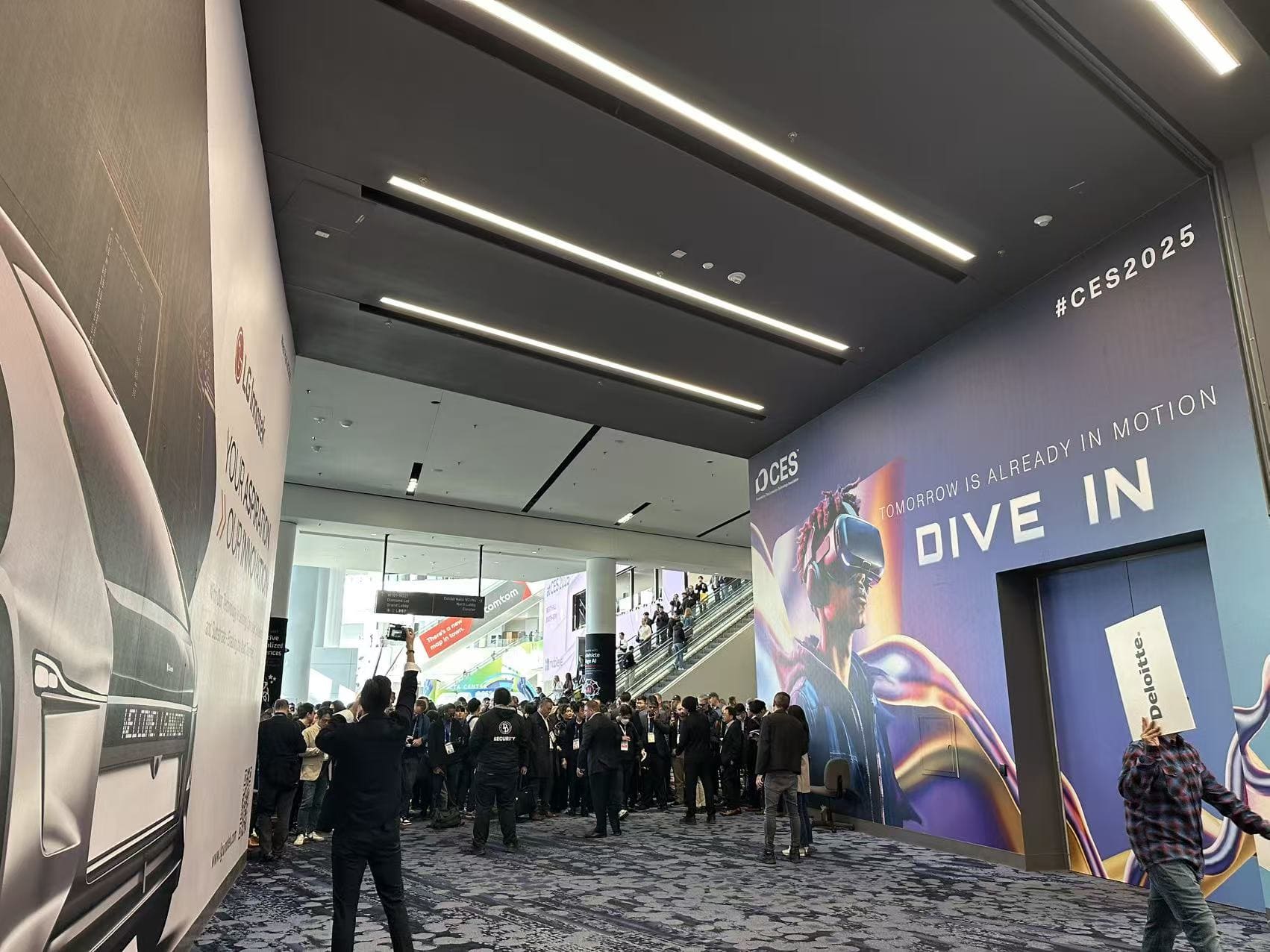
I have worked with many overseas exhibitors at Las Vegas trade shows. I have seen booths that looked full but felt unclear. I have also seen the same companies return with a better booth plan and get much better conversations. The difference was not only the booth size. The difference was how the booth helped visitors feel safe enough to stop, ask, sit, and share real buying needs.
Why does a product-only booth fail in the U.S. market?
Many exhibitors believe products can speak for themselves. I have watched that idea fail when buyers walk past because they do not understand the brand fast enough.
A product-only booth fails because it makes visitors work too hard. U.S. buyers need fast clarity, proof of credibility, and a clear reason to talk2. If the booth only shows products, it may not answer the buyer’s real question: “Can I trust this company?”
I have seen product displays create silent pressure
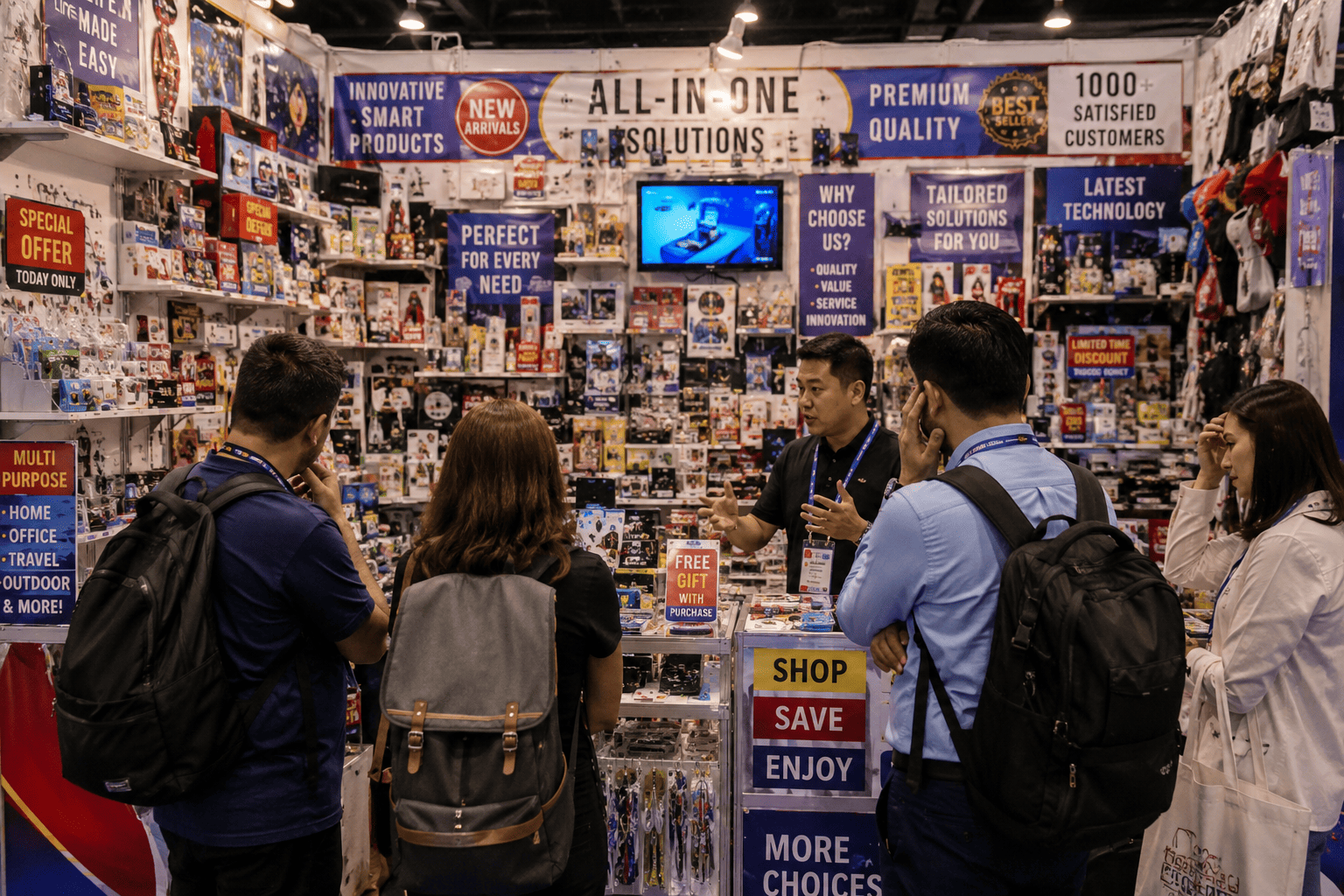
I have seen overseas exhibitors bring strong products to U.S. shows and still get weak booth traffic. The products were real. The samples were good. The team knew the factory well. The problem was the booth layout made the visitor feel trapped or confused. Buyers did not know where to enter. They did not know what the company did in one short look. They saw many products, but they did not see a clear buying reason.
| Product-only booth choice | What I often see visitors do | Better booth choice |
|---|---|---|
| Many products on every wall | Visitors scan and leave fast | Group products by buyer need |
| Small text and crowded graphics | Visitors avoid reading | Use one clear main message |
| No meeting area | Buyers keep talks shallow | Add a simple seating space |
| Staff standing in the aisle | Visitors feel blocked | Leave open entry points |
I do not see the booth as a shelf. I see it as the first sales room in the U.S. market. The room must guide people. It must reduce doubt. It must make the first question easy.
How do U.S. buyers judge trust from a booth?
Many overseas exhibitors ask me why buyers do not stop. I usually look at the booth first. Buyers often judge trust before they hear one word.
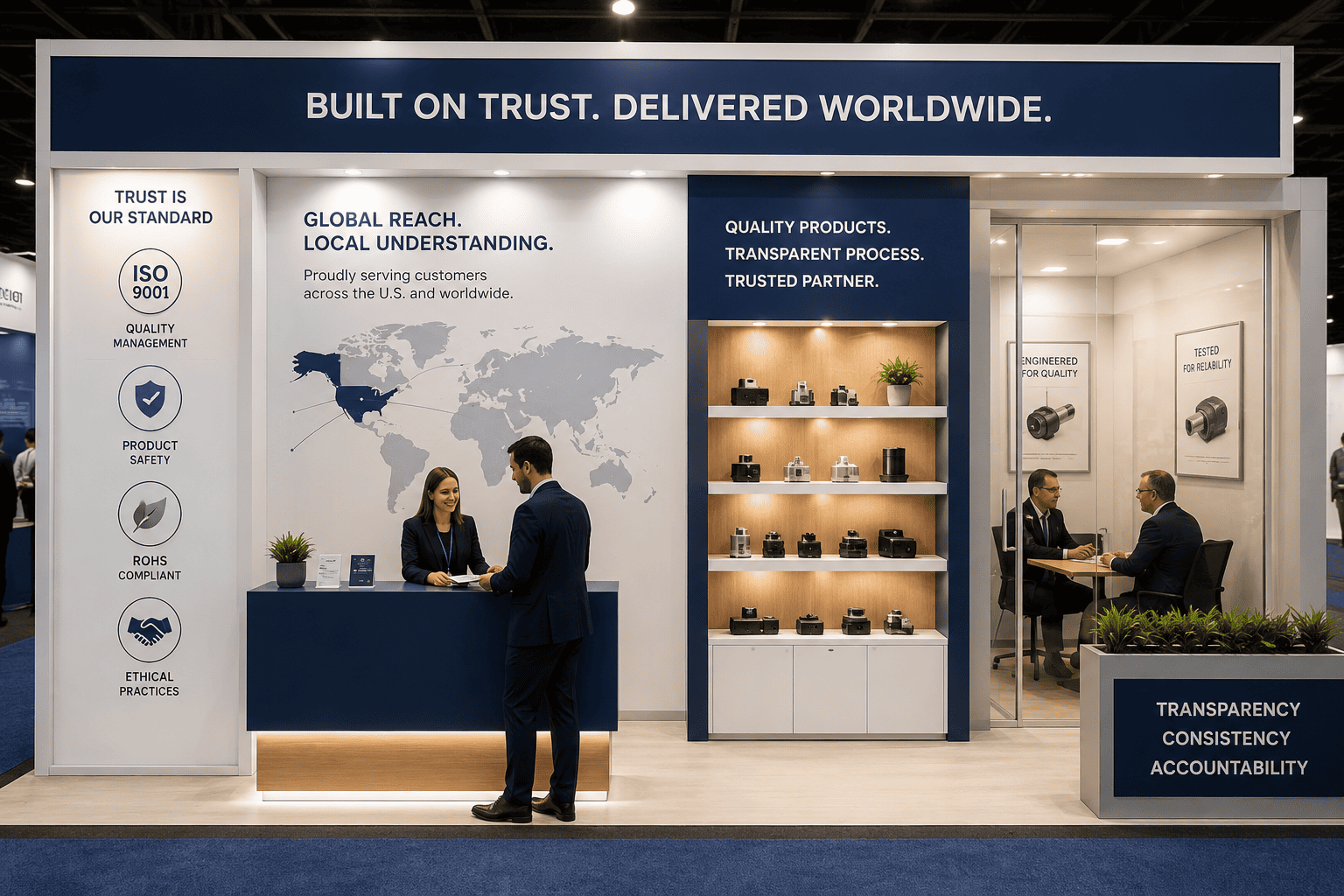
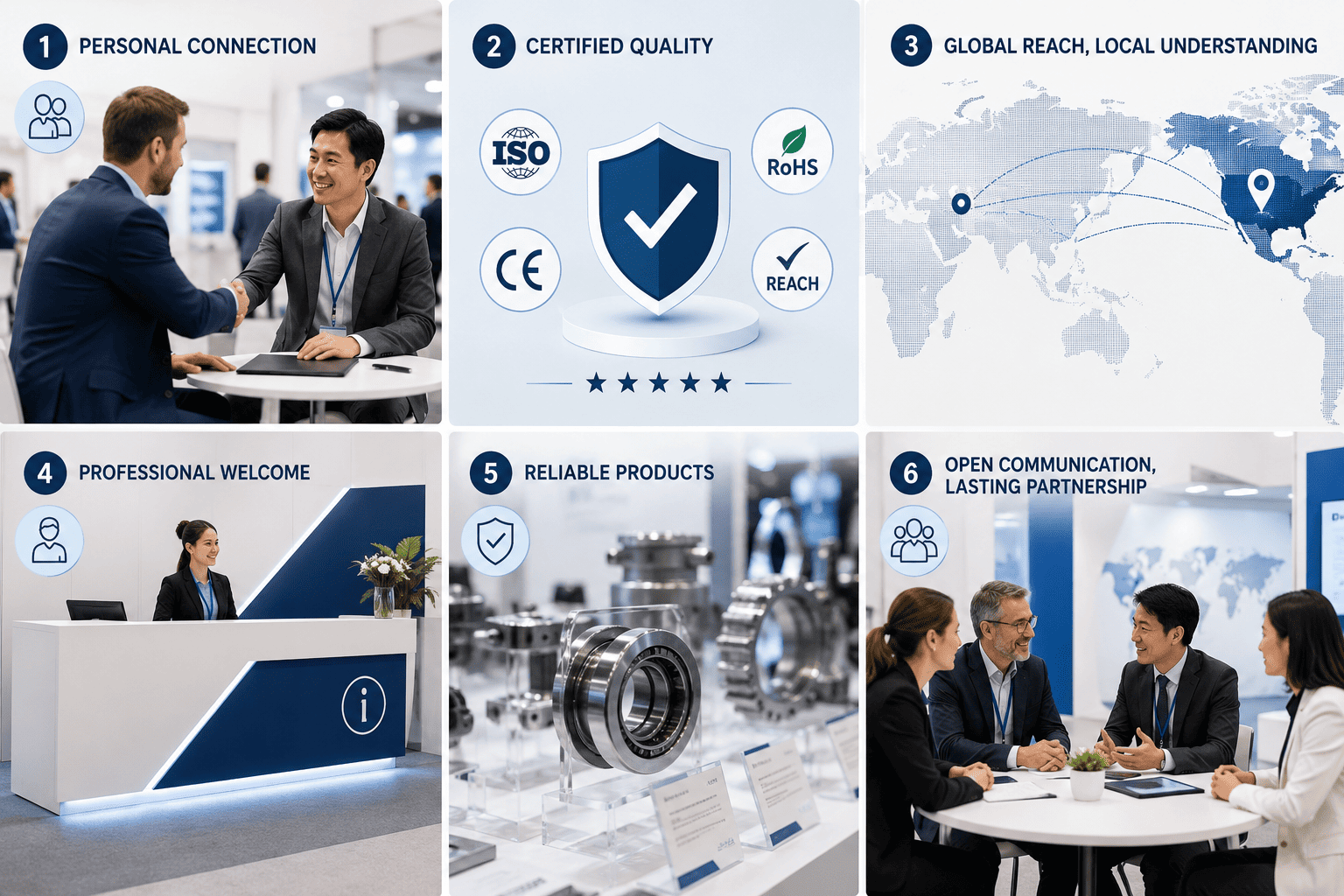
U.S. buyers judge trust through clear messaging, clean graphics, organized space, staff behavior, meeting areas, and product focus3. They may not say these things out loud, but they use them to decide whether the company looks ready for serious business.
I treat the booth as a silent credibility test
I have learned that “professional” does not always mean expensive. I have seen simple booths feel more credible than large booths. The simple booths worked because they gave buyers clear signals. The company name was easy to see. The core message was short. The graphics looked clean. The team had a proper place to talk. The products were selected, not dumped into the space.
| Trust signal | What the buyer may think | What I try to design |
|---|---|---|
| Clear headline | “I understand what they do.” | One message from the aisle |
| Clean product zones | “They know their market.” | Fewer products with better labels |
| Meeting table | “They are ready for business.” | A place for serious talks |
| Private storage | “They are organized.” | Hidden bags, boxes, and clutter |
| Good lighting | “Their products matter.” | Light on key products and graphics |
I have seen buyers step into a booth because the message answered one problem in plain words. I have also seen buyers ignore a booth with many screens and samples because the space had no clear path. I do not design trust by adding decoration. I design trust by removing confusion.
How should a booth guide visitor behavior?
A busy aisle can hide a good brand. I have seen visitors slow down, look confused, and leave because the booth gave them no next step.
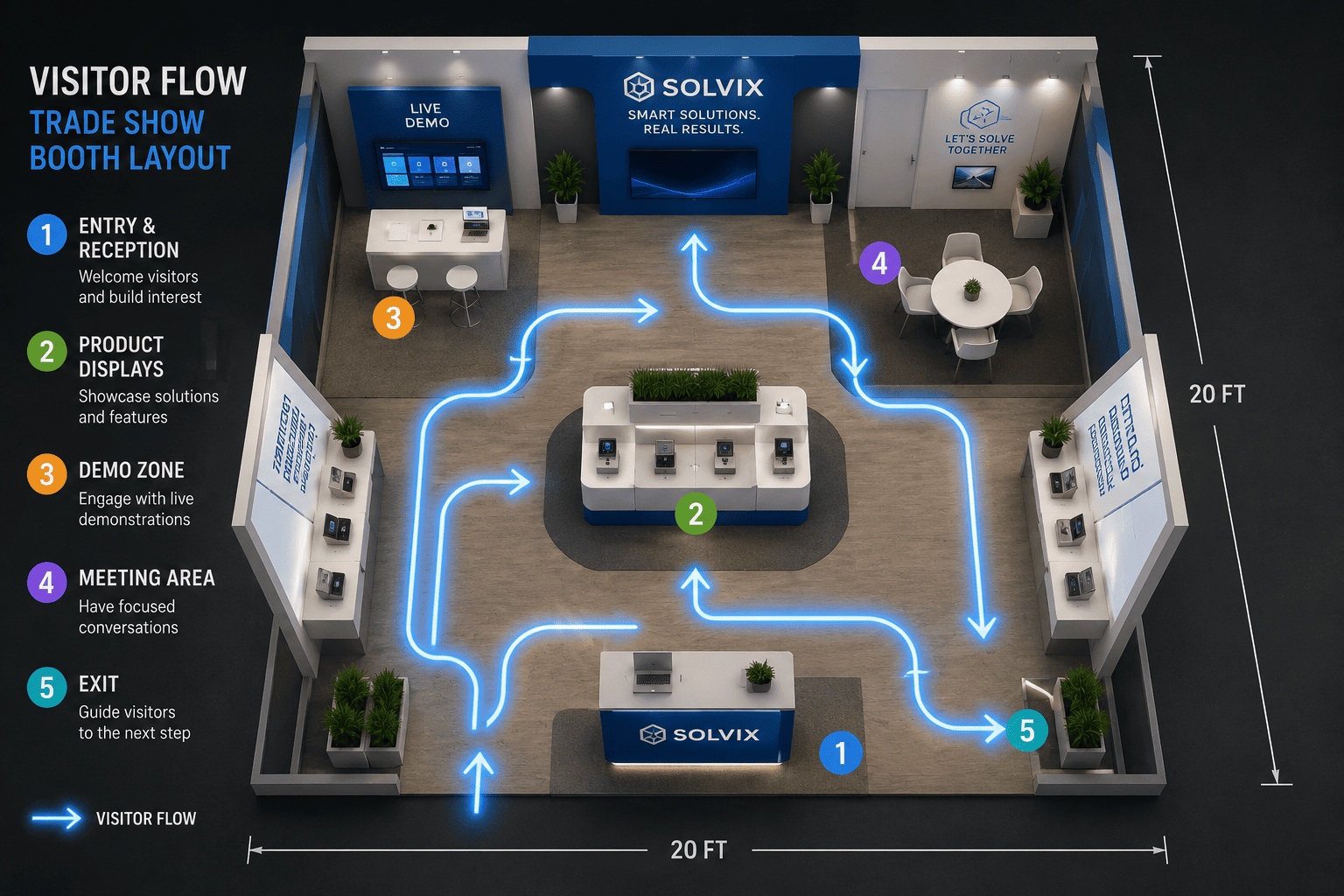
A booth should guide visitors from attention to understanding, then from understanding to conversation4. The design should create a simple path: see the message, notice the solution, enter without pressure, speak with staff, and move into a deeper meeting if needed.
I start with the first three seconds5
I often stand in the aisle before I review a booth plan. I ask one simple question. Can a buyer understand the company in three seconds? If the answer is no, the design needs work. The aisle is fast. Buyers are tired. They have many booths to visit. They will not solve a puzzle.
| Visitor moment | Booth question I ask | Design action I use |
|---|---|---|
| Aisle view | Can the buyer tell what we do? | Use a large, clear headline |
| First stop | Does the product match the message? | Put key products near open edges |
| Entry | Is the path easy? | Keep openings clear |
| Talk | Can staff start a natural question? | Create demo or sample points |
| Deeper interest | Can we sit and discuss details? | Add a meeting zone |
I have diagnosed many failed booths by watching the first few steps. I look at where visitors pause. I look at where they turn away. I look at whether staff can approach without blocking the path. A good booth does not force a conversation. It makes the conversation feel normal. It gives the buyer a reason to say, “Tell me more.”
What booth elements help overseas brands look ready for the U.S. market?
Some exhibitors believe they need a bigger booth to look serious. I have seen smaller booths work well when the message, space, and proof feel right.
Overseas brands look ready when the booth shows clear positioning, professional graphics, focused products, easy meeting space, and proof of business capacity. The booth should make buyers feel that the company can support sales, service, delivery, and long-term cooperation.
I focus on signs of readiness
I have worked with exhibitors who had strong manufacturing ability but did not show that ability well. Their booth showed products, but it did not show readiness for U.S. buyers. A buyer may ask silent questions. Can this company communicate clearly? Can it deliver on time? Can it support my channel? Can it handle follow-up? The booth cannot answer every question, but it can make the buyer willing to ask them.
| Booth element | Buyer doubt it reduces | Simple way to show it |
|---|---|---|
| Main brand message | “What do they do?” | Use one clear promise |
| Application images | “Where is this used?” | Show real use cases |
| Product groups | “Which item fits me?” | Organize by need or category |
| Meeting area | “Can we talk seriously?” | Add seating and privacy |
| Company proof | “Are they stable?” | Show certifications, clients, or capacity carefully |
I do not like cramming every product into the booth. I prefer to show enough to open the right talk. I have seen exhibitors remove half their displayed products and get better questions. The booth then felt easier to understand. The staff could explain faster. The buyer could connect the product to their own business faster.
How can a booth turn a failed show into a better second attempt?
A failed first show can feel embarrassing. I have seen teams blame the city, the show, or the buyers. Sometimes the booth was the real problem.
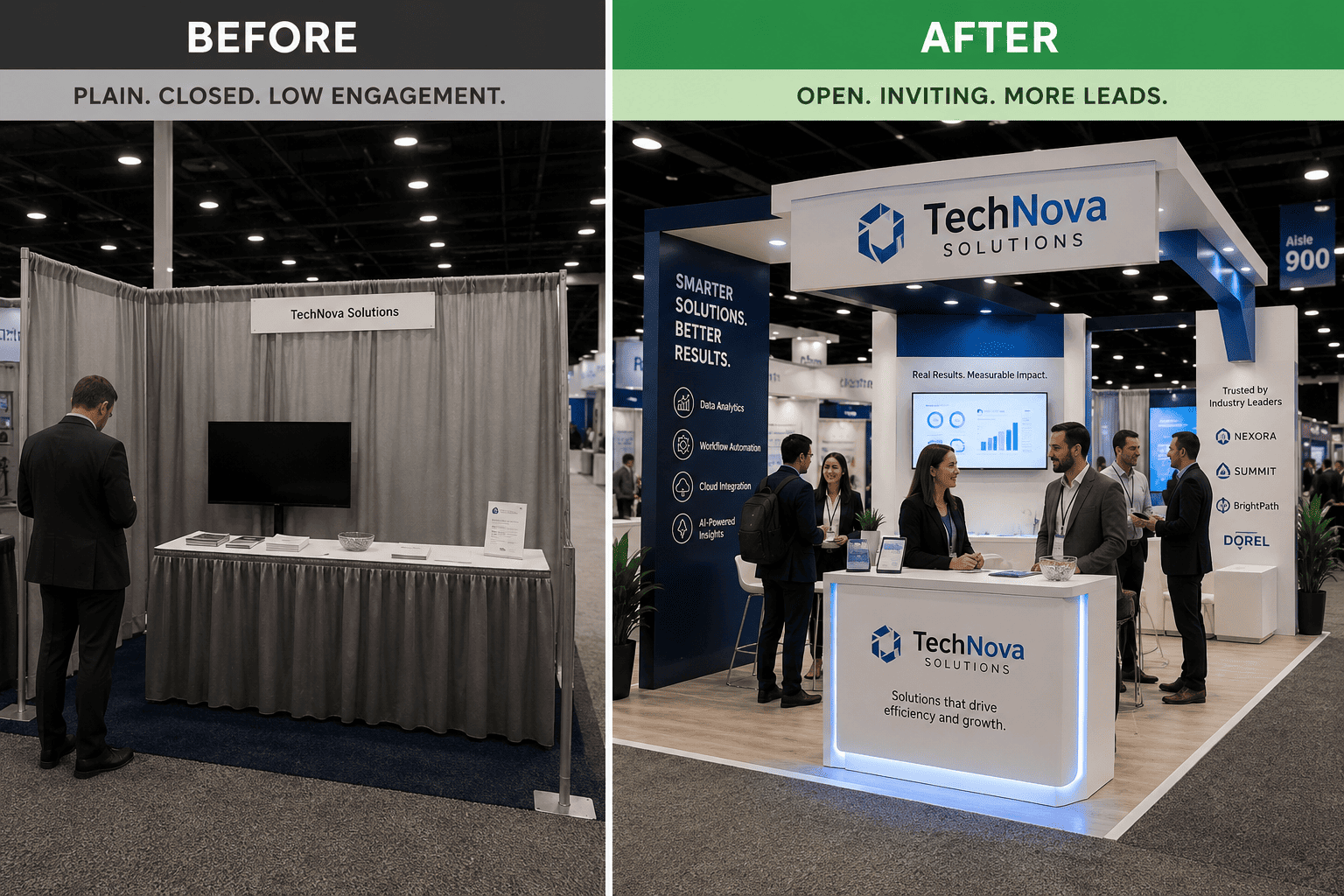
A better second attempt starts with honest diagnosis. I review visitor flow, message clarity, product focus, staff position, meeting space, and lead capture. Then I redesign the booth so it supports trust and conversation instead of only display.
I look for the point where interest gets lost
I have managed overseas exhibitors through difficult first shows and better later shows. I do not treat a weak show as proof that the U.S. market is wrong. I ask where the booth failed the visitor. Did the visitor see the message? Did the visitor understand the offer? Did the staff have a good opening line? Did the layout invite entry? Did the booth have a place for a deeper talk?
| Failure sign | Possible booth cause | Redesign response |
|---|---|---|
| Many people look but do not enter | The entry feels blocked | Open the front and reduce clutter |
| Visitors ask “What do you do?” | The message is unclear | Change the main graphic and headline |
| Talks stay short | There is no sitting space | Add a simple meeting area |
| Staff cannot handle traffic | The demo points are weak | Create clear zones for product talks |
| Leads are low quality | The booth attracts the wrong people | Align graphics with target buyer needs |
I remember one overseas exhibitor who came to me after a weak show. The company had good products, but the booth looked like a storage room with graphics. We changed the layout, reduced the product count, made the message clearer, and added a small meeting area. I will not claim a magic result, but I can say the team had stronger conversations because the booth finally supported the sales process.
How should I justify booth design budget to my team?
Many teams see booth design as a cost. I understand that view. I also see how poor design wastes travel, samples, freight, and staff time.
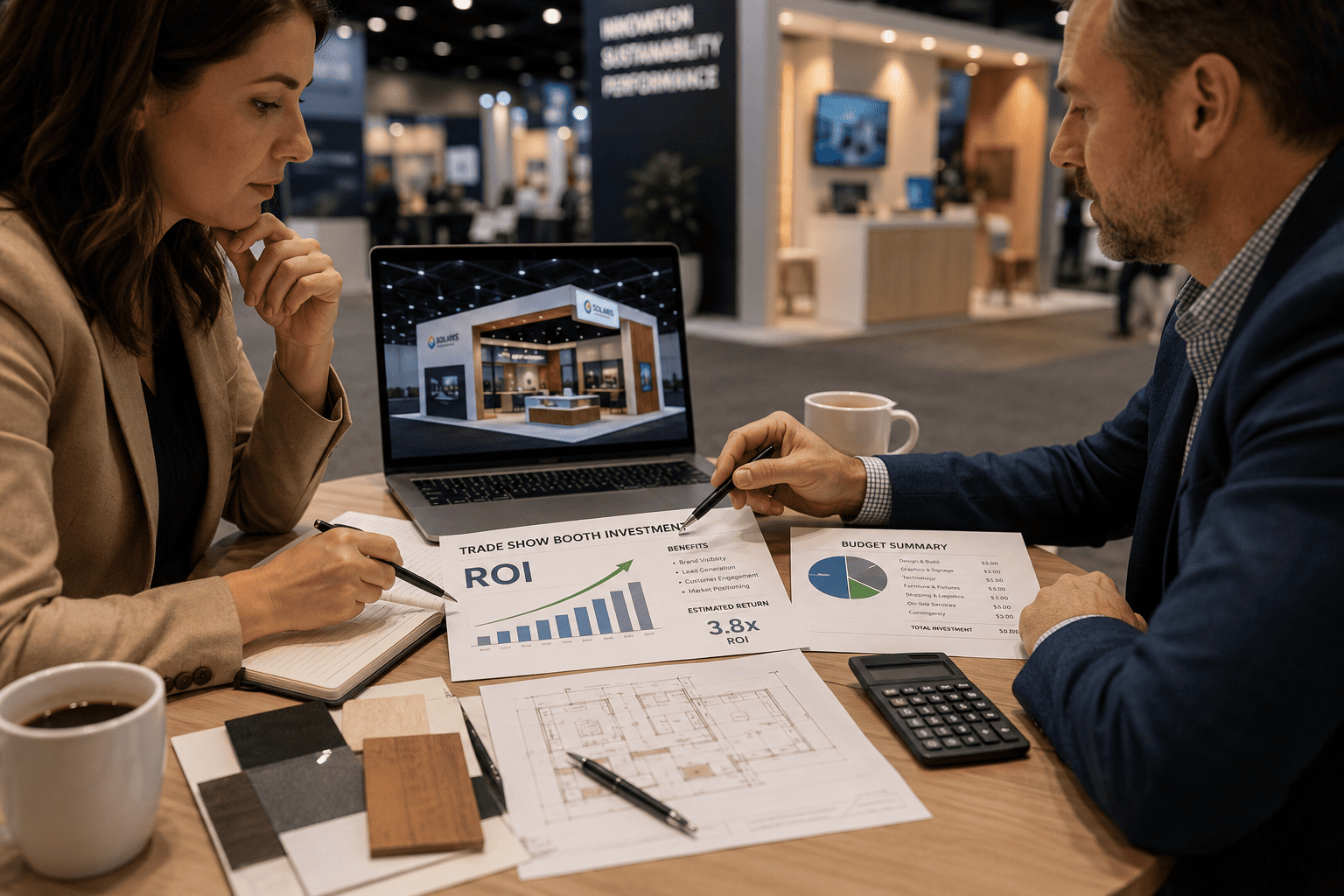
I justify booth design budget by linking it to buyer trust, visitor flow, conversation quality, and lead handling. The booth is not only a physical structure. It is the place where U.S. buyers decide if the brand deserves more time6.
I compare booth cost with lost opportunity
I do not tell exhibitors to spend more just to look larger. I tell them to spend in the places that affect visitor behavior. A better headline may matter more than another display shelf. A clean meeting area may matter more than another wall of samples. Good lighting on the right product may matter more than a complex decorative feature.
| Budget item | Bad reason to spend | Better reason to spend |
|---|---|---|
| Larger structure | “We want to look big.” | “We need space for meetings and demos.” |
| More graphics | “We need to fill walls.” | “We need clearer buyer messages.” |
| More products | “We need to show everything.” | “We need to show the best entry points.” |
| Premium materials | “We want luxury.” | “We need a clean and stable brand feel.” |
| Extra storage | “It is just convenient.” | “We need to keep the booth professional.” |
I have seen internal teams approve booth budgets more easily when the reason is clear. I would not say, “We need a nicer booth.” I would say, “We need a booth that helps buyers understand us in three seconds, gives them a reason to enter, and gives our team a place to close deeper conversations.” That sentence changes the budget discussion. It makes the booth part of market entry, not part of decoration.
What should overseas exhibitors prepare before designing the booth?
Some companies start with booth size and decoration. I prefer to start with the buyer. The design becomes stronger when the business goal is clear.
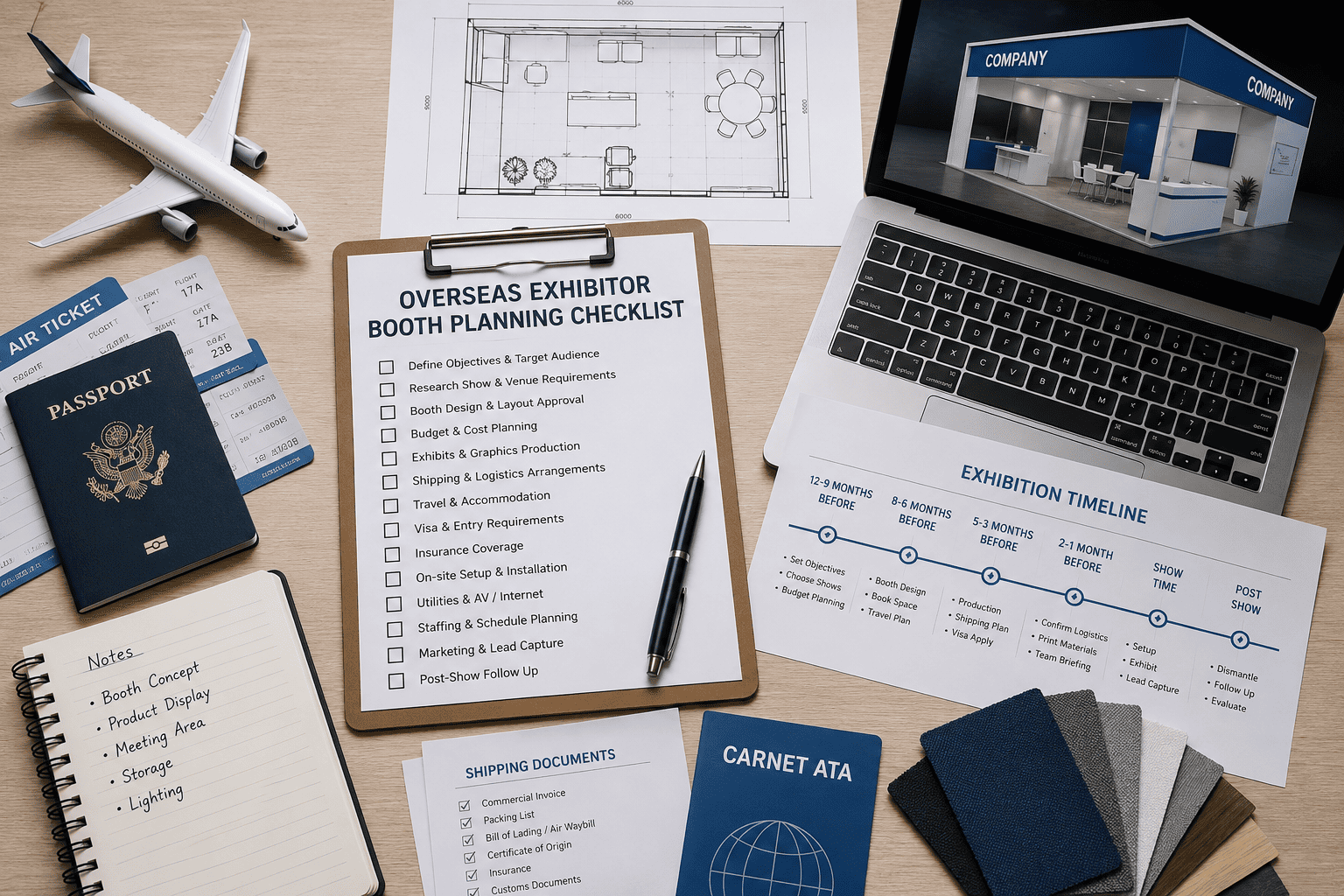
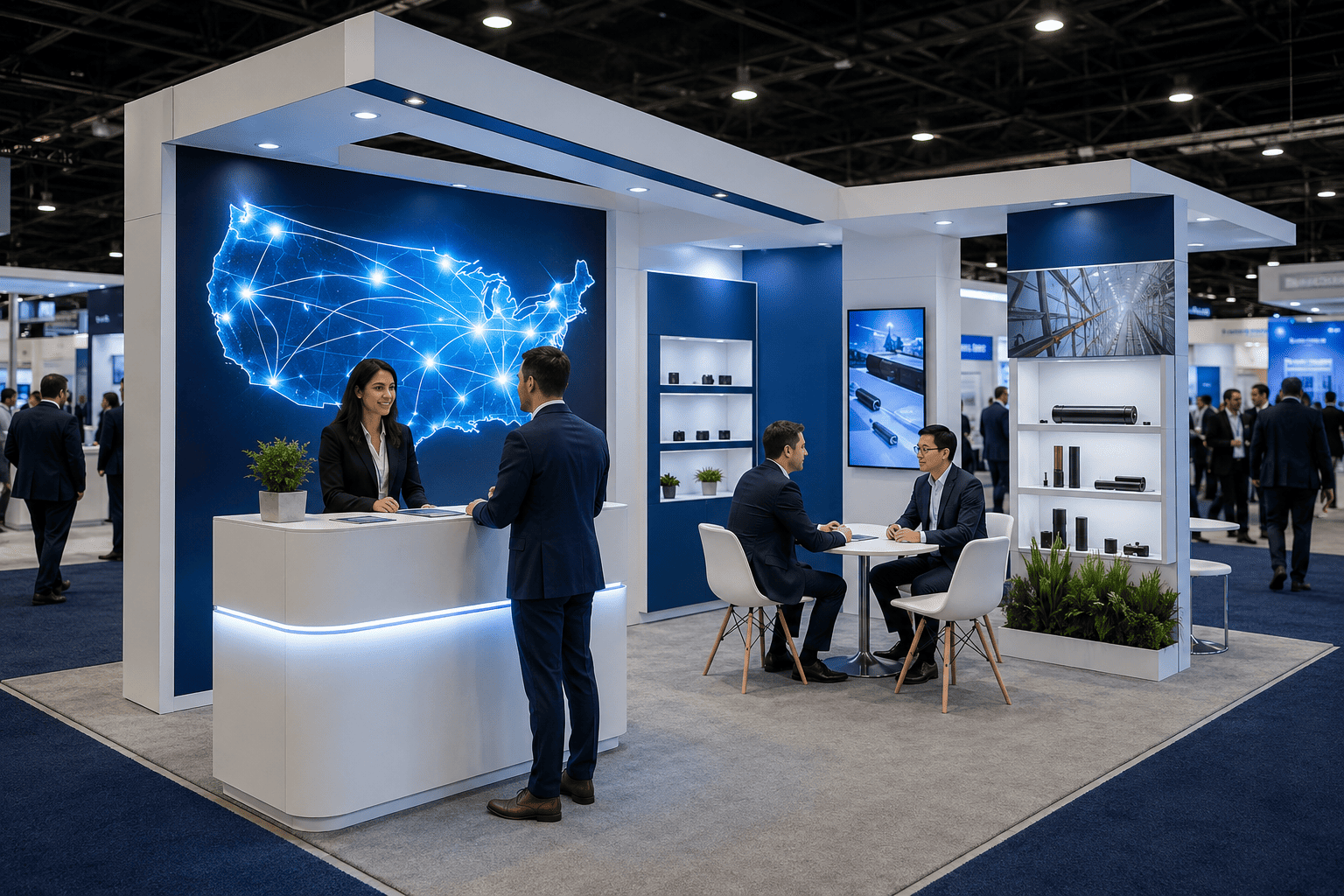
Overseas exhibitors should prepare their target buyer profile, main message, key product focus, proof points, meeting needs, demo needs, and follow-up process before booth design starts. Good design needs clear business input, not only floor plan measurements.
I ask business questions before design questions
I have seen booth projects go off track because the team started with colors, wall shapes, and product shelves. Those details matter, but they come later. I first want to know who the company wants to meet. I want to know what problem the product solves. I want to know what buyers usually doubt. I want to know what the sales team needs after the visitor stops.
| Preparation question | Why I ask it | Booth decision it affects |
|---|---|---|
| Who is the target buyer? | The booth should attract the right people | Graphics, copy, and product focus |
| What is the main offer? | Visitors need fast clarity | Headline and aisle message |
| What proof matters most? | Buyers need trust before deep talks | Certifications, cases, capacity displays |
| What products start the best conversations? | The booth should not feel crowded | Product selection and demo points |
| What happens after a lead is scanned? | The booth must support follow-up | Meeting notes and lead forms |
I also ask overseas exhibitors to be honest about their U.S. readiness. If the company has no local stock, no U.S. team, or no clear service plan, the booth should not hide that reality. The booth should present the strongest real position. Buyers can sense when a booth promises more than the company can support. I prefer clear truth over a large claim.
Conclusion
I use a trade show booth as a trust checkpoint. When the booth builds clarity, comfort, and credibility, U.S. market entry becomes more realistic.
"Trade Show Statistics USA 2026 - Kande Photo Booths", https://www.kandephotobooths.com/blog/trade-show-statistics/. Trade show industry research documents that international exhibitors frequently face higher costs and lower engagement rates compared to domestic exhibitors, often attributed to cultural communication barriers, brand unfamiliarity, and booth design misalignment with local buyer expectations. Evidence role: general_support; source type: research. Supports: Research on challenges faced by international exhibitors at U.S. trade shows. Scope note: Success rates vary significantly by industry, company preparation, and specific show characteristics ↩
"[PDF] The Impact of Buyer Needs on Perceived Trade Show Effectiveness", https://digitalcommons.georgefox.edu/cgi/viewcontent.cgi?article=1039&context=dbadmin. Studies of trade show visitor behavior indicate that buyers make rapid initial assessments based on booth clarity and credibility signals, with most engagement decisions occurring within seconds of approach. Evidence role: general_support; source type: research. Supports: Research on trade show visitor behavior and decision-making patterns among U.S. B2B buyers. Scope note: Research may focus on specific industries or show types rather than universal buyer behavior ↩
"Appearance between professionalism and work-related stress ...", https://pmc.ncbi.nlm.nih.gov/articles/PMC10473140/. Marketing research on credibility formation identifies environmental cues including spatial organization, visual professionalism, and staff presentation as significant factors in initial trust assessments, particularly in contexts where buyers lack prior brand familiarity. Evidence role: general_support; source type: research. Supports: Research on environmental and visual cues that influence credibility assessments in business contexts. Scope note: The relative importance of specific cues varies by industry, buyer sophistication, and cultural context ↩
"(PDF) Exploring visitor experiences at trade shows", https://www.academia.edu/3487843/Exploring_visitor_experiences_at_trade_shows. Exhibition design research describes visitor engagement as a staged process involving attention capture, information processing, and interaction initiation, with effective booth design facilitating natural progression through these phases. Evidence role: mechanism; source type: research. Supports: Research on visitor progression and engagement stages in exhibition environments. Scope note: Visitor behavior varies by show type, buyer intent, and individual decision-making styles ↩
"Screen time can change visual perception — and that's not ...", https://www.binghamton.edu/news/story/2650/screen-time-can-change-visual-perception-and-thats-not-necessarily-bad. Cognitive research on visual attention in commercial environments suggests that initial brand comprehension and interest decisions occur within 3-5 seconds of exposure, consistent with broader findings on rapid impression formation. Evidence role: statistic; source type: research. Supports: Research on attention spans and initial impression formation in trade show environments. Scope note: The exact timeframe varies by context, visitor fatigue, and booth complexity ↩
"[PDF] “A Literature Review Generalizing About Trade Show Effectiveness ...", https://ufdcimages.uflib.ufl.edu/AA/00/05/75/14/00001/tstearns7-Final%20Honors%20thesis.pdf. Trade show research characterizes booth interactions as critical filtering points in the B2B buying process, where buyers make rapid assessments of supplier suitability that determine whether relationships progress to more substantive evaluation stages. Evidence role: mechanism; source type: research. Supports: Research on the role of trade show booths in buyer evaluation and relationship development processes. Scope note: The booth's role varies depending on buyer familiarity with the brand and their stage in the purchasing process ↩